Skip Navigation
Volunteer The Hague Home
  • Events & Workshops
  • News
  • Volunteer The Hague Talks
Create accountLog in

Contact

  • Riviervismarkt 2, 2513 AM The Hague, Netherlands
  • [email protected]
  • 070 - 302 44 44
Volunteer The Hague

Volunteer The Hague

  • About us
  • Contact us
  • For volunteers
  • For organizations
  • Den Haag Doet
  • Den Haag Doet Academie

Join

  • Opportunities
  • Discover Organisations
  • Create organisation
  • Create account
  • Login
  • Help
  • Policies
  • Privacy Policy
  • Terms

Powered by Deedmob tools (opens in a new window)

Post | January 2026 | 2 min read

Rethinking Resolutions: Setting Intentions for a Meaningful New Year

Written by

Lucie Cunningham
Vassia Sarantopoulou, founder of and head psychologist at AntiLoneliness is a mentor and business coach for therapists at The Therapy Business Circle and an international speaker specialised in burnout and perfectionism recovery. Her presentation invited people to move away from conventional rigid New Year’s resolutions and instead create meaningful intentions that are rooted in values, instead of self-imposed pressure, perfectionism, or external expectations. Many people aim at losing some weight, finally get a promotion or find a better job this time of the year which makes them experience additional stress.    Why does this matter? Traditional resolutions often fail because they focus on outcomes without addressing why these goals matter. For high-achievers and perfectionists, this can reinforce burnout, guilt, and self-criticism. The power of intentions is how they shift the focus from performance to alignment, they make us plan how we want to live, not just what we want to achieve.         Photo credit: Michel Heerkens Fotografie    Here are some steps that she recommends you follow to set your intentions this year.  Zoom out: find your Life Compass  Reflect on your key life areas (physical health, mental health, career, relationships, finances, community, etc.) and identify which areas need immediate attention.     Choose priorities  Instead of changing everything, select two key life areas to focus. Do encourage realism, sustainability, and self-compassion.     Clarify your “Why”  Explore why this area matters, how it would improve your life and why it deserves time, energy, and resources This will deepen your motivation and lowers your chances of quitting.     Understand the difference  Goals are specific outcomes whereas resolutions require behavioral intentions and values work as your inner compass. True change happens once goals and habits are anchored in values.     Shift from values to intentions  Identify your values (personal and professional). Set goals aligned with those values, translate them into meaningful intentions and show how your intentions can be supported by small, realistic habits.     What makes intentions different from resolutions  Intentions are directional, they are not perfection-based. They focus on how you show up, not just what you accomplish. They allow flexibility, compassion, and course correction which is especially important for people prone to burnout.     Do you want to start the new year in a meaningful way? Choose intentions over pressure and let values guide goals, not fear or comparison. Build habits that clearly support what matters most and revisit intentions regularly and reflect, rather than judge.
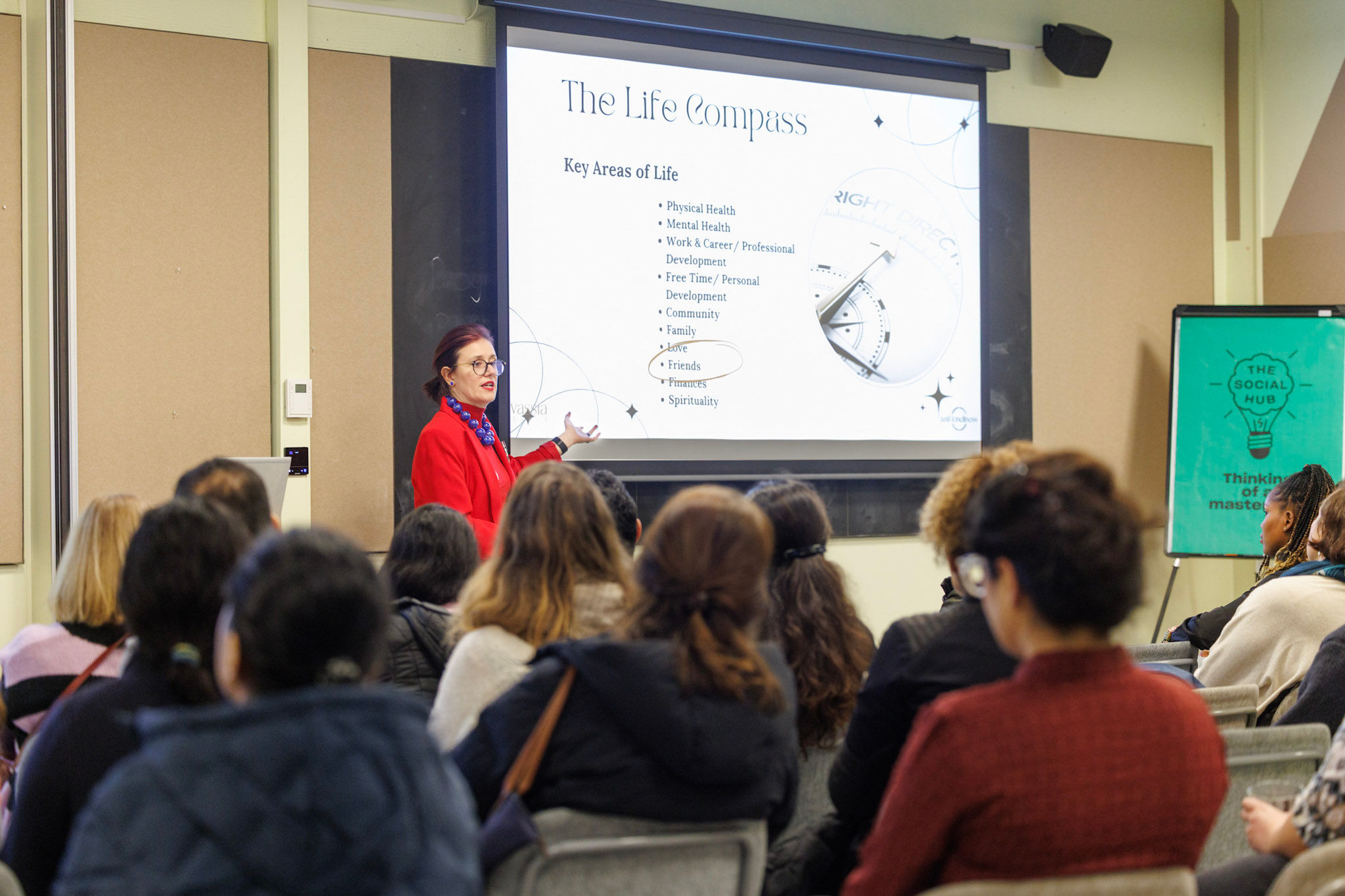
Vassia Sarantopoulou, founder of and head psychologist at AntiLoneliness is a mentor and business coach for therapists at The Therapy Business Circle and an international speaker specialised in burnout and perfectionism recovery. Her presentation invited people to move away from conventional rigid New Year’s resolutions and instead create meaningful intentions that are rooted in values, instead of self-imposed pressure, perfectionism, or external expectations. Many people aim at losing some weight, finally get a promotion or find a better job this time of the year which makes them experience additional stress.


Why does this matter? Traditional resolutions often fail because they focus on outcomes without addressing why these goals matter. For high-achievers and perfectionists, this can reinforce burnout, guilt, and self-criticism. The power of intentions is how they shift the focus from performance to alignment, they make us plan how we want to live, not just what we want to achieve. 


Photo credit: Michel Heerkens Fotografie


Here are some steps that she recommends you follow to set your intentions this year.

Zoom out: find your Life Compass

Reflect on your key life areas (physical health, mental health, career, relationships, finances, community, etc.) and identify which areas need immediate attention. 


Choose priorities

Instead of changing everything, select two key life areas to focus. Do encourage realism, sustainability, and self-compassion. 


Clarify your “Why”

Explore why this area matters, how it would improve your life and why it deserves time, energy, and resources This will deepen your motivation and lowers your chances of quitting.


Understand the difference

Goals are specific outcomes whereas resolutions require behavioral intentions and values work as your inner compass. True change happens once goals and habits are anchored in values. 


Shift from values to intentions

Identify your values (personal and professional). Set goals aligned with those values, translate them into meaningful intentions and show how your intentions can be supported by small, realistic habits. 


What makes intentions different from resolutions

Intentions are directional, they are not perfection-based. They focus on how you show up, not just what you accomplish. They allow flexibility, compassion, and course correction which is especially important for people prone to burnout. 


Do you want to start the new year in a meaningful way? Choose intentions over pressure and let values guide goals, not fear or comparison. Build habits that clearly support what matters most and revisit intentions regularly and reflect, rather than judge.

Volunteer to act on your intentions!
Share Post
Related Posts
Do you live in The Hague as an international and want to acquire some basic Dutch or improve your existing Dutch? Volunteering a great way to practrice comprehension, small talk and better understand local culture.

How to learn Basic Dutch through volunteering in The Hague

Ask anyone who has tried to learn Dutch in a classroom, and they'll tell you the same thing: the textbook takes you only so far. You can memorise verb conjugations and drill vocabulary for months, but the language stays flat and distant until you use it with real people, in real situations, about things that actually matter. This is where volunteering quietly does what no course can. In The Hague, offering your time is one of the most natural and rewarding ways to grow into the language and the culture, even if you begin without speaking a word of Dutch. You can start in a language you already have by joining the free Volunteer The Hague volunteer pool! One of the biggest fears that newcomers carry is that they can't contribute until their Dutch is "good enough." The reassuring truth is that you don't have to wait. The Hague is one of the most international cities in the Netherlands, home to embassies, international courts, expats, and organisations that work across many languages. Plenty of volunteer roles are carried out in English, or in whatever language you and the people around you share. This is why Volunteer The Hague was created, to empower people who speak other languages than Dutch to find volunteer vacancies that require no fluency in Dutch. Starting in another language isn't a compromise, it's a doorway. It lets you become useful and connected from day one, while Dutch slowly builds in the background. You show up, you help, you belong, and the language follows. Fluency grows through repetition and context What makes volunteering such a powerful teacher is that it surrounds you with the same words, phrases, and rhythms again and again. If you help in a community kitchen, you'll hear how people greet each other, ask for the salt, and say goodbye, every single week. If you sort donations at a charity shop or help at a neighbourhood centre, you pick up the practical vocabulary of everyday Dutch life: numbers, directions, small talk, polite requests. This is language learning with context attached. Instead of memorising a list of words, you learn them tied to a moment, a person, a task. That's how the brain actually holds on to a language. Over time, the Dutch you hear stops being noise and starts being meaning. You begin to catch the gist, then whole sentences, then you find yourself replying without translating in your head first. Colleagues and the people you serve tend to be patient and encouraging, too. In a low-pressure, friendly setting, you feel safe making mistakes, and mistakes are exactly how fluency is built. A volunteer environment forgives the wrong article or the fumbled word, because everyone can see you're there to help. Reading the unwritten rules Language is only half of fitting in. The other half is culture, the unspoken norms that shape how people behave, and these are almost impossible to learn from a book. Volunteering puts you right inside them. You'll notice how direct Dutch communication tends to be, and learn not to take plain-spokenness as rudeness. You'll see how seriously appointments and agreements are taken, how meetings often start and end on time, and how the famous Dutch calendar culture works in practice. You'll observe the value placed on egalitarianism, that the coordinator and the newest volunteer often speak to each other as equals, and the way decisions are frequently talked through until everyone has had a say. You'll pick up smaller customs too: bringing something to share, the rhythm of coffee breaks, how birthdays are celebrated, and why the whole room might congratulate you when a family member has good news. Absorbing these norms by living them helps you move through daily life in The Hague with far more ease and confidence. A community that carries you forward Perhaps the greatest gift is the network you build. The people you volunteer alongside become a real social circle, and that circle is where the deepest learning happens. They correct you gently, invite you to things, explain the joke you didn't get, and cheer on your first full Dutch conversation. Motivation matters enormously in language learning, and nothing motivates like relationships. When you care about the people around you, you want to understand them, and that desire pulls your Dutch forward faster than any deadline. So don't wait until your Dutch is perfect. Start volunteering in whatever language you have. The fluency, and the sense of belonging, will grow from there. One day when you are much more fluent in Dutch consider applying for volunteer vacancies in our sister volunteer programme Den Haag Doet. Visit Volunteer The Hague’s online volunteer vacancy platform to start your volunteer journey in your new city!
See more
Consider becoming a buddy in The Hague, volunteering to support a lonely or vulnerable person can be emotionally and culturally rewarding! Vist the Volunteer The Hague's online vacancy platfor to find a buddy role.

Becoming a Buddy: The Quiet Power of Showing Up

Some of the most meaningful volunteering doesn't happen at a big event or helping out at your local food bank. It happens over coffee, on a slow walk through the park, or a visit to The Haagse Markt. This is what it means to be a buddy: to offer someone your steady presence, week after week, and to let an ordinary friendship do something extraordinary. Being a buddy is one of the simplest forms of volunteering, and also one of the most powerful. You don't need special qualifications or a background in social work. You need time, patience, and a genuine willingness to connect with another person. In return, you often gain far more than you expected. To be a buddy through a Dutch non-profit organisation, you usually must apply for a certificate of conduct (Verklaring Omtrent het Gedrag, VOG) as you would be helping a vulnerable person. Who needs a buddy? There are many people who could use a friendly, reliable companion, and buddy programmes exist to match volunteers with those who would benefit most. You might become a buddy for someone who feels lonely. Loneliness can affect anyone, at any age, and it rarely announces itself. A person recovering from illness, or someone who has recently lost a partner may go days without a real conversation. A weekly visit or call can break that silence and remind them that they matter. Many people who grew up in The Netherlands are fluent in English, sometimes in German or French as well. It would be interesting for them to converse with someone who can compare life in The Netherlands and another country. Expect to learn new perspectives and better understand why things are done a certain way in The Netherlands. You will likely find some shared interests or experience of having grown up in the countryside or big city. You could be playing chess, visiting museums or going for a walk in the woods of The Hague. A local would know about the many free or affordable cultural events in the region. You might choose to be a buddy for an elderly person. As people grow older, their social circles often shrink. Friends pass away, children move to other cities, and mobility becomes harder. For an older person, a regular visitor to share stories, play a game of cards, or simply sit with over tea can be the highlight of the week. And the stories you hear in return, decades of life, history, and hard-won wisdom, are a gift in themselves. Several retirement homes in The Hague area look for volunteers to go on a group walk with their residents who are in a wheelchair. What a nice way for them to chit chat outdoors with you breaking the boredom of only spending time in their rooms and cafeterias. You might support a refugee who is new to The Hague. Arriving in a new country is disorienting: an unfamiliar language, a maze of paperwork, customs that feel strange, and few people to turn to. As a buddy who speaks their mother tongue, you could help them understand how to navigate public transport. You become a bridge into a new life, and often a friend who shows that this new place can feel like home. Some people volunteer as a buddy for a child. Some children grow up without enough positive attention, or face challenges at home that make life heavier than it should be. A dependable adult, someone who turns up, listens, and cheers them on, can make a lasting difference. You don't have to fix anything. You just have to be there, consistently, in a way a child can count on. This is especially suitable if you already speak Dutch and have had children who were educated in the Dutch school system. What does a buddy actually do? The honest answer is: not much, and everything. Buddies go for walks, share meals, help with small practical tasks, attend appointments, or simply talk. The activities are almost beside the point. What matters is the relationship, the sense that someone has chosen to spend time with you, without being paid to and without being obliged to. Most buddy programmes ask for a modest but regular commitment, often an hour or two a week over several months. That consistency is the whole idea. Trust is built slowly, and the value of a buddy grows the longer you stay. What you gain People often sign up to give something, and are surprised by how much they receive. Buddies describe a deep sense of purpose, new perspectives on life, and friendships that cross generations and cultures. Helping someone else has a way of putting your own worries into proportion, and few things feel better than knowing you've genuinely brightened another person's week. There's also good evidence that connection benefits both sides. The person being supported feels less isolated, and the volunteer often reports feeling happier and more grounded too. Taking the first step If any of this resonates, look for a buddy or volunteer organisation in your area through the Volunteer The Hague online volunteer vacancy bank or at one of our in-person events. Many run a short intake conversation and offer training and support, so you're never on your own. You'll be matched thoughtfully, with someone whose needs fit what you can offer. You don't have to change the whole world. You just have to show up for one person. Often, that's more than enough.
See more
How you can help your local community centre in The Hague by helping prepare or serve meals for vulnerable people

Sharing Food, Building Connections: How Internationals Can Help Prepare Community Meals

A simple meal can make a big difference. Across many neighbourhoods in The Hague, community centres organise convivial dinners and lunches where people can enjoy comforting food, friendly conversation, and a sense of belonging. These meals are especially important for senior citizens and other vulnerable residents who may be feeling lonely or isolated. International residents can play a valuable role in making these gatherings a success. One way to get involved is by volunteering as a kitchen assistant. Helping to prepare food, serve meals, set up tables, or tidy up afterwards are all practical ways to support community centres and meet new people at the same time. Another wonderful contribution is sharing food from your own culture. Internationals can help create menus inspired by the cuisines they know and love, while adapting recipes to suit a diverse audience. Lowering spice levels and including halal, vegan, and vegetarian options ensures that everyone feels welcome at the table. Food is a great way to discover different cultures and start conversations between neighbours who might otherwise never meet. Community lunches offer much more than a warm bowl of soup, bread, tea, and coffee. They provide a reason to leave the house, a regular activity to look forward to, and an opportunity to connect with others in the neighbourhood. Friendships are formed, stories are shared, and people feel part of a community. By sharing their time, skills, and culinary traditions, internationals can help create welcoming spaces where everyone feels included. One meal at a time, together, we can build stronger, more connected neighbourhoods, where you, as an active resident, also feel at home.
See more